Study landscaping, landscape construction, plant establishment and more
- Exceptional training for landscape professionals.
- Work as a garden designer, planner, landscaper, landscape architect, horticulturist, consultant, contractor or specialist.
- Develop and supply services or products for the landscape industry.
Course Duration - 2,500 hours of self paced learning (approximately 3 years full-time or longer part time).
Articulation:
This Diploma incorporates the Diploma in Landscaping VHT025 (Which equates with modules 1 to 21). As such, an alternative is to undertake the Diploma first, then upgrade to the Advanced Diploma by completing modules 22 to 25 later on.
Upon completing this Advanced Diploma, it is possible to upgrade to further qualifications through our UK school. For these options contact our UK office.
Proper Use of Plants in Landscaping
There are two main parts to garden or landscape design and development. One is the way you put together the non living things (e.g. wood, stone, gravel, soil), and the other is how you put together the plants.
Some landscapers do the non living things (ie, hard landscaping) well; but fall down with the use of plants.
Other landscapers use the plants well (ie soft landscaping), but are never as good as they could be with hard landscaping
Few landscapers are really good at both. If you aspire to be good at both; this is the course for you. It lays a very sound foundation for you to realize your full potential with both hard and soft landscaping.
What is involved with Soft Landscaping?
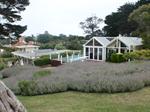
There are thousands of different plants that are used in gardens; and to use them appropriately, and create predictable results, you need to learn about enough different plants to create the affects that you need to create. For a good landscaper, this would normally mean over one thousand different plants, and perhaps several thousand. This is not something you learn overnight; but this course should get your plant knowledge up to that level -along with everything else you need to learn.
Trees
1. Shade
Plant shade trees where they will do the most good, consider strength of branches, nature of root system, etc. proximity to buildings and other structures (i.e. Branches may fall and cause damage, roots may do damage). Also consider density of foliage. Some trees will provide a very heavy shade others will only provide a light shading.
2. Enframement
A view or feature is framed by careful placement of trees e.g. Place trees in front of the two corners of a lawn or building.
3. Screening
Trees can be used to block distant views, enhancing other views which are left open. They may also screen the effect of winds and other environmental conditions.
4. Growth Rate and Size
Always consider the growth rate and eventual size. How long will it be before an intended effect is achieved? What will the effect be in the meantime? (NB: With some slow growing trees it may take 50 years for the eventual effect to be achieved).
Shrubs
1. Enframement
Shrubs are frequently used in combination with trees, buildings or fences, to frame a view into or away from a landscape.
2. Screening
Large shrubs can screen unwanted views either completely breaking the view (with dense foliage), or partially breaking the view (with see through foliage).
3. Accent
Accent is achieved through a visual break in the sequence or pattern of planting. It is used to create a dramatic effect and focus attention upon one particular part of a landscape. If an accent is to work properly, it must be strong e.g. A gap in the centre of a row of plants is a weak accent if it is only a slightly greater spacing than the normal spacing between those plants, but is a strong accent if it is a much larger space.
Groundcovers
Ground cover is a term which could encompass any number of different types of plants. There are generally two main types....
- Lawn substitutes
- Ornamental ground covers
- Vines or creepers can grow in the following ways...
- Twining...vertical twisting growth; supports needed; these can become top heavy (e.g. passionfruit).
- Tendrils...suckers which cling on to walls or fences (e.g. Ivy)
- Weaving...young shoots wrap through older branches (e.g. Jasmine).
- Leaning.. climbing shoots may grow up against a structure (or tree).
Landscaping Career Opportunities
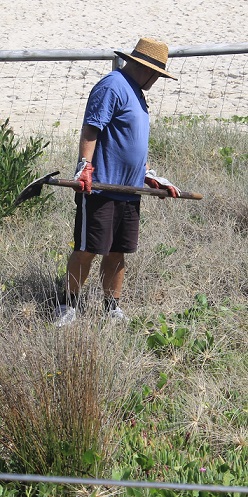 Landscaping is exciting, creative and technical.
A good landscaper for the future needs to be part artist, part scientist, part businessman; and perhaps a whole lot more.
In the past, working in landscaping was simple involving either designing gardens or constructing gardens. Today it is a lot more complicated; and in the future, the industry may become even more complicated. With complexity comes opportunity though -so long as you are prepared to embrace it.
This course prepares you to embrace those future opportunities in landscaping!
We all know that the world is changing fast. This is evident in everyday life, in business, in industry, and in our personal lives. Almost every week we are offered new and more sophisticated technology to help us communicate or to perform common tasks. The landscape industry too has not been exempt in this evolution. New technologies have allowed us to create landscapes without soil using hydroponics; with low light using artificial light; with limited water using better water management and with more flower colour for longer using modern plant breeding. Who knows what the future holds?
Recognise and Embrace Change
 If you want to have a career in landscaping, you must recognise the inevitability of change. To have a long and sustainable career, you need to be able to adapt to change, and to excel you need to embrace and take advantage of change. To achieve this, your knowledge and skills in landscaping must be broad based. If you understand the fundamental skills needed - across all sectors of landscaping- you will be able to see opportunities as they arise and confidently move from one sector to another, throughout your career. As an example, anyone with underpinning knowledge of plant science and plant cultural practices: plant growth and identification, soil management, pruning and pest control and the associated technologies, will be able to work in landscaping for a few years, then move to turf management or nursery production and later back to landscaping.
Sound, broad-based training in the fundamentals of landscaping and horticulture are a good starting point for entering this industry. However, not all courses on offer will be broad enough or in-depth enough to set you up for a sustainable, lifelong career – so you need to understand the fundamentals required in horticulture (in general) and then choose a diverse course, that enables you to achieve these aims.
Fads and Fashions
Landscaping has always moved from one fashion to another. Natural gardens may be fashionable for a while; then formal gardens take over as the trend. Right along though; there are always some people who want both.
It is hard to predict the fads of the future; but anyone who is trained across a wider range of things and to a greater depth, will always be better prepared to adapt.
Why Study the Course?
This is a great course to choose, if you want to not only learn about the subject now but keep learning after you finish studying.
This course should not only develop knowledge and understanding of how to design and build all types of gardens; but also:
- Help you build and expand your contacts, building valuable networking in the landscape industry
- Improve your ability to communicate with others within the landscaping discipline
- Develop problem solving skills relevant to landscaping
- Expand awareness and develop creativity to produce ever better designs
- Develop attributes that set you apart from others in landscaping
- Motivate you, build confidence, and more
- Raise your awareness of opportunities, and enable you to make better informed decisions as you progress your involvement with the landscape industry.
According to some authorities, success is actually only affected about 20% by your knowledge and intelligence.
Our school works at helping you in a holistic way, to develop all of the things
mentioned above, in a way that relates to the discipline you are studying; and
in this way, giving you the capacity to apply yourself to unanticipated problems,
to understand new information as it emerges, to see and seize on new opportunities as they reveal themselves, and to continue to grow your abilities within your discipline as you progress through life after study.
In a world that is changing faster all the time; it is difficult to even be certain how this industry might change between the start of your course, and the time you finish studying.
With this in mind; any course that is to have long term value in today's world, must develop broad generic skills that are relevant to landscaping. This approach to education is not unique to ACS, but it is an approach tested, proven and adopted in our courses; and an approach that is also used by some of the most successful, cutting edge universities and colleges around the world.
WHAT NEXT?
Register to Study - Go to panel toward top of this page (right column)
or
Get Advice - Use our FREE COUNSELLING SERVICE to contact a tutor
CLICK TO CONTACT US